Tuesday, 22 May 2012

Exercise to Manage Parkinson's Disease


What is Parkinson’s disease?
Parkinson’s disease is a progressive disorder that affects the central nervous system. According to MedicineNet.com, it is the most common movement disorder. This condition occurs when there is an insufficient production of the chemical – dopamine – in the brain. Dopamine is a messenger in the brain that is responsible for producing smooth, coordinated muscle movements. Thus, in people with Parkinson’s disease, this lack of dopamine in the brain results in limited and uncoordinated movement.

Causes
The cause of Parkinson’s disease is unknown; however genetic and environmental factors, such as exposure to toxins, are potential contributing factors.

Symptoms
The following symptoms may occur with Parkinson’s disease:
·         Tremors
·         Rigidity
·         Bradykinesia (limited movement of the extremities)
·         Poor motor control when rising form a chair
·         Stooped posture
·         Shuffled and stiff gait (walking pattern)
The figure below illustrates the typical standing posture of an individual with Parkinson’s disease.


<!--[endif]-->

Treatment and Exercise
Parkinson’s disease is treated with medication. But, because it is a movement disorder, it is essential that people with this condition also receive supervised physical therapy on a regular basis, in order to maintain functional ability for as long as possible. The condition is progressive; however, exercise can help to slow the progression and maintain mobility.

Falls are a common problem in people with Parkinson’s disease because of the shuffled and stiff walking pattern. Individuals with this condition will tend to stoop forward, shuffling their feet along the ground instead of picking them up. This may result in them tripping over the smallest uneven surface and possibly falling. These people also often have a slower reaction time, meaning they are less likely to catch themselves if they lose their balance. Falls are very serious in elderly people, as their injuries become more severe, resulting in less mobility, thereby creating a vicious cycle.

So, the first and most important aspect to consider when working with a Parkinson’s patient is that of gait, or walking pattern. It is essential to make these people aware of how they walk and make the necessary corrections, explaining why these corrections are made. Also, practice walking in various directions and around different objects, so that they become comfortable with moving in different directions.

Fluid movements must be encouraged. These include walking, cycling and swimming, amongst others. If a person has already developed a tremor, one does not want to exacerbate this by getting them to lift excessive weights. Keep weight training to a minimum and rather do more repetitions, keeping the movements smooth and manageable. This will also create a feeling of achievement which is important for motivation.

Stretching and flexibility exercises are important to maintain range of motion. Therapists must be aware of how the person is feeling. If one overstretches a patient, they may respond by tensing up the muscles, thereby exacerbating rigidity. The patient must remain relaxed during stretching.

It is important to ensure that exercises are functional, thereby assisting patients to maintain their ability to perform the activities of daily living. Find out what an individual struggles to do at home and work on ways to improve those movements.

So, for those of you who may have been diagnosed with this condition, don’t sit back feeling sorry for yourself. Get up and keep moving! With the help of a Biokineticist, you can still have prolonged functional ability and quality of life!

Wednesday, 25 April 2012

Total Knee Replacement Surgery: Pre- and Post-Operative Rehabilitation


Total knee replacement surgery is a common means of treating degeneration and/or osteoarthritis of the knee joint. It requires the two degenerated articulating surfaces to be replaced, making it a highly invasive and traumatic procedure. It is, therefore, important that numerous measures are taken to ensure one is physically ready for surgery.


In the case of an elderly person, the surgeon may require the patient to have a full medical examination with a physician prior to surgery to ensure the patient is physically strong enough to undergo surgery. In the past, total knee replacement surgery was done using a full anaesthetic. Nowadays, it is becoming more common to use sedation together with an epidural.

If possible, the patient should start a pre-operative programme to strengthen the knee. This will help to strengthen the surrounding muscles that support the knee joint, thus shortening the recovery process. One must also try to maintain or improve one’s general physical fitness, so that the physical state of the individual is adequate prior to surgery in order to improve recovery. Exercise may, however, cause further inflammation and discomfort, so care must be taken at all times. A Biokineticist plays a crucial role in this process.

Below are some guidelines with regards to exercises that can be done prior to a total knee replacement procedure.

Exercise to improve cardiovascular fitness:
Cycling – high saddle
Walking – tolerable to pain
Swimming or water aerobics – minimal impact and strain on the knee
Arm ergometry

Strengthening exercises for the rest of the body:
Arm strengthening exercises – machines or dumbbells – important for holding ones weight on the crutches following surgery
Abdominal and core strengthening exercises – to assist in maintaining good posture

Strengthening exercises for the muscles surrounding the knee:
Quadriceps setting
Straight leg raises
Heel slides
Calf raises
Foot pumps
Ball squeezes (between knees)
Hip raises
Glute squeezes with a theraband

Following surgery, the first step is to regain mobility and range of motion of the knee joint. One must see a physiotherapist regularly to assist in regaining range of motion. Once this has been achieved, one should see a Biokineticist to assist you in starting an exercise programme to again strengthen the surrounding muscles. Initially, the exercises will be similar to those done prior to surgery and they will become progressively harder with time. The exercises should be done at least 3 to 5 times per week. Cardiovascular and upper body strengthening exercises that were done pre-surgery should be restarted as soon as possible to regain general physical fitness.

So, don’t be afraid to start exercising as soon as you feel ready to do so. With the correct guidance and appropriate progression, the rehabilitation can be more successful and the recovery time can be shortened significantly.

Thursday, 12 April 2012

Multiple Sclerosis

What is it?
Multiple Sclerosis (MS) is an autoimmune disease that affects the central nervous system, that is, the brain and spinal cord. All nerves are surrounded by a myelin sheath – a protective layer surrounding the nerves. This myelin sheath assists in the conduction of neural signals from the brain to the muscles, innervating the muscles and thereby creating muscular contractions. With MS, demyelination of these sheaths occurs, resulting in the neural conduction along the nerves being adversely affected. Speed of conduction is reduced and the result is a reduction in smooth, rapid and coordinated movement. The effects can range from little or no disability to severe disability.


Various types of MS exist
The National Multiple Sclerosis Society identifies 4 types of MS: relapsing remitting, secondary progressive, primary progressive and progressive relapsing. The most common form is relapsing remitting MS (RRMS). In this case, one has relapses, where symptoms are present, and then periods of remittance, where symptoms subside or disappear altogether. The more relapses a person has, the more severe the symptoms become. Stress, both physical and emotional, is the main contributing factor causing a relapse.

Causes
MS occurs as a result of the myelin sheath surrounding the nerves being damaged. This can be due to inflammation, when the body’s own immune cells attack the nervous system (autoimmune disease). The reason for this is unknown, but is thought to be due to a virus or genetic defect.

Who is at risk?
MS is more common in women. It is generally diagnosed between the ages of 20 and 40, but can occur at any age.

Symptoms
MS affects numerous body systems, including the eyes, bowel and bladder, sexual function, speech and swallowing and, most noticeably, the muscular system. In this blog, I will discuss the muscular system only. According to ACSM, the physical symptoms include the following:
  • Spasticity
  • Incoordination
  • Impaired balance
  • Fatigue
  • Muscle weakness, paresis (partial paralysis) and paralysis
  • Sensory loss and numbness
  • Cardiovascular problems
  • Tremors
  • Heat sensitivity

The role of exercise in managing MS
The progression or prognosis of MS is not affected by exercise. However, a person with MS will still experience the short-term benefits of partaking in a regular exercise programme, such as improved cardiovascular fitness, increased strength and flexibility, and improved functional ability. People with MS often lose function in their legs, resulting in them being unable to walk. It is important to strengthen and stretch the leg muscles in order to prolong function. One should also focus on balance and stability exercises to reduce the risk of falling.

Important things to remember
People with MS do not have the same ability to regulate their body temperature as those without MS, so it is important to keep the room temperature in which you are exercising cool.
If muscles are overworked or overstretched, this can cause an acute inflammatory response, which may exacerbate symptoms. So, take it easy! Rather use lighter weights and do more repetitions to improve endurance and muscle tone.

Monday, 19 March 2012

This week, I am posting an article on hypertension from a dietitians perspective. You may recall that I wrote an article on hypertension and exercise last year sometime. Now you can read about food substances to include or avoid if you have this condition. For more information, visit: http://goodlifedietitians.blogspot.com/.

Hypertension: The Silent Disease

Hypertension is a condition where blood pressure is too high. Hypertension is often called a silent disease since there may be no signs or symptoms that you have it. A normal blood pressure is 120/80mmHg. This measurement shows the pressure at which the heart is contracting (systolic blood pressure- 120) and relaxing (diastolic blood pressure- 80). A person is diagnosed with hypertension when they have a consistently high blood pressure of above 140/90mmHg.

Symptoms of hypertension may include frequent headaches, impaired vision, and shortness of breath, nose bleeds, chest pain, dizziness, and poor memory. Hypertension almost doubles a person’s risk of heart attack and stroke. If left untreated high blood pressure can also lead to heart and kidney failure, as well as loss of sight.

In last week’s post we focused on one aspect of lowering blood pressure: cutting back on your salt intake. Unfortunately for some though treatment of high blood pressure requires more than just a low salt diet. If you are hypertensive, follow these tips on dietary and lifestyle changes to help lower your blood pressure.


Check your blood pressure on a regular basis
If you have high blood pressure, buy a blood pressure machine (also called a sphygmomanometer) from your local pharmacy or Dischem. Keep a record of your blood pressure. 


If you are overweight, lose weight
Losing weight will naturally help to lower blood pressure. Studies have shown that blood pressure increases with increasing weight. A weight loss of just 5kg has been shown to lower blood pressure. Aim for a desirable body weight at a BMI below 25kg/m2.


If you chose to drink alcohol, do so sensibly
A high alcohol intake has been shown to increase blood [pressure. Limit to 2 alcoholic drinks per day for men, and 1 alcoholic drink per day for women and light-weight individuals. One drink is the same as one beer, half a glass of wine, or 30ml of spirits,

Eat plenty of fresh fruits and vegetables

Fruits and vegetables are high in potassium, a mineral which has been found to help lower blood pressure when eaten in large amounts. Oranges, potatoes, tomatoes, pumpkin, squash and avocado are all high in potassium.

Fruits and vegetables are also naturally low in salt, as well as low in calories to help in weight loss. Increase your intake of fresh fruits to 2 portions per day and vegetables to 4-5 portions per day.


Be active
Increase your exercise levels to at least 2-3 times per week for 30-45 minutes. For more on exercising in hypertension, go to http://www.nicolepicasbiokinetics.blogspot.com./


A stressful lifestyle can increase your blood pressure further
Be sure to take time to relax and decrease your stress levels

 
Look for Heat Mark products
The Heart Mark is a guideline for shoppers to instantly identify healthy products on the supermarket shelves. Products approved by the Heart Foundation are lower in cholesterol, lower in saturated fat, lower in salt (less than 450mg per 100g of a product), high in fibre (where applicable), and lower in added sugar. This means that all products with the Heart Mark are the healthier choices.

Wednesday, 29 February 2012

Asthma and Exercise

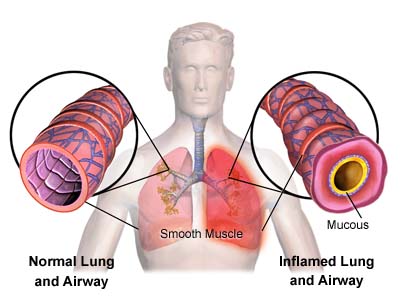
According to the American College of Sports Medicine (ACSM), asthma is: “a syndrome characterized by reversible obstruction to airflow and increased bronchial responsiveness to a variety of stimuli, both allergic and environmental”. In other words, asthma is a chronic inflammation of the bronchi (airways) in the lungs.

Asthma varies from person to person and ranges in severity from mild to severe. It is induced by different stimuli, such as allergens or exercise. The stimulus that brings on an asthma attack in a particular individual must be known and considered when establishing an exercise regimen for that individual.

Exercise capacity can either be limited as a result of having asthma, or exercise can in fact induce an attack, thereby exacerbating the condition. This may cause individuals to avoid exercise wherever possible.

The symptoms of exercise-induced asthma include the following (ACSM):
·        Wheezing
·        Coughing
·        Shortness of breath
·       Chest discomfort
    The symptoms may last up to 30 minutes after an exercise bout. If the exercise bout is prolonged, then symptoms may occur during the session. If the condition is mild, then individuals can usually exercise at an intensity of 75% of maximum heart rate before symptoms are induced. In more severe cases, mild exertion may induce symptoms. Although exercise may induce symptoms, it is important to include exercise in the management of this condition.

    Individuals with well-controlled exercise-induced asthma are able to exercise with little or no symptoms. The training effects will be the same as in individuals who do not have asthma. Thus, these individuals should follow the same exercise guidelines as those for individuals who do not have asthma and thus should include cardiovascular, strength and flexibility exercises into their routines. In more severe cases, where exercise intensity is limited by symptoms, individuals can concentrate on improving endurance, rather than high-intensity fitness and should also include resistance and flexibility exercises.

    It is important to realise that one can and should continue to lead a very healthy and active lifestyle, even if they have been diagnosed with asthma. You must consult your doctor with regards to exercise and to take the medication that has been prescribed by your doctor in order to keep the condition under control and to reduce symptoms during exercise. If you have asthma and don’t know how to start an exercise programme, starting off with a biokineticist can point you in the right direction.