Friday, 30 November 2012

Balance in the Elderly


Following on from my last blog, in which I discussed the importance of ankle rehabilitation and stability, here I will discuss how important ankle stability is with regards to balance in elderly people. As we age, we tend to move less and less, resulting in our joints and muscles stiffening up, which in turn results in less movement again. This vicious cycle continues until we are barely able to move which in turn affects our ability to perform activities of daily living.

When you see an elderly person, the first thing you notice is the typical stooped posture and shuffled walking pattern, both of which are major contributing factors to the high prevalence of falls in the elderly. I will discuss posture in the elderly in the next blog.

Limited ankle stability and mobility are also major contributing factors to loss of balance and thus falls in the elderly. Hence, I again stress the importance of rehabilitating the ankle following an injury, so that movement and strength of the joint are regained as soon as possible. The longer it is left, the worse it will become.

A common movement that becomes limited is lifting of the toes to allow for a heel strike. The ankle mobility required for this movement is reduced and the muscle in front of the shin becomes weak. The consequence of this is that the toes drag along the floor, hooking on uneven surfaces and thus causing a person to trip and fall. A good exercise to prevent this: sit in front of the TV and tap your toes, making sure to lift them as high off the ground as possible, while keeping the heels down. A simple and highly effective exercise!

Another exercise that will help maintain the mobility of the ankle joint is to write the letters of the alphabet using the ankle, so that it is moving in every direction. Again, this can be done while sitting in front of the TV, but be sure to concentrate on moving the ankles through their full range of motion!

The calves are another muscle group that need to be kept strong in order to assist with walking. While standing in the kitchen waiting for the kettle to boil, hold onto the counter and rise up onto the toes and then lower. Repeat this at least 10 times, 3 times a day.

The next group of muscles to target are the hip flexors – the muscles allow you to lift your knees up. These need to be strong so that you can lift your leg up off the ground to achieve a heel strike. To strengthen these, simply march on the spot, again holding onto the counter while waiting for the kettle to boil.

Finally, balance is required to walk, thus it is vital to practice balancing on one leg so that the ankles stay accustomed to it. Again, while standing at the kitchen counter, stand on one leg, keeping your hands near the counter to catch you if necessary – safety first, as you do not want to fall!


Remember: when you walk, you need to lift your knees to pick your feet up off the ground, strike the ground with your heel and then push off with your toes. Watch where you walk, and if the surface is uneven, exaggerate the movements so that you don’t trip!

If you are struggling with walking and balance, consult a Biokineticist, as it is essential to keep moving as much as possible as you age!

Tuesday, 30 October 2012

Ankle Stability


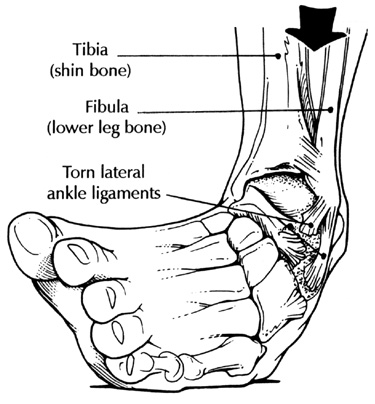
The ankle is a complex joint, comprised of numerous ligaments and supporting structures. Together with the foot, the lower limb is an extremely vulnerable part of the body, as it is responsible for supporting the entire body while changing direction, kicking, as well as all other movements that are performed. Injuries, such as ankle sprains, muscle strains or ligament damage, amongst others, are therefore very common in the lower limb and can be debilitating.

Many people complain about ‘weak ankles’, ‘rolling their ankles’, or ‘going over on their ankles’. This is generally due to poor ankle stability, an aspect of conditioning that is often neglected. The result can be a ligament sprain or muscle strain, which can be very painful and which can take a very long time to heal.


In order to prevent an ankle sprain or to adequately recover from such an injury, one must do ankle stability exercises to strengthen the supporting muscles and ligaments around this joint. Such exercise include simple actions like balancing on one leg to more complex actions like standing on one leg on an unstable surface while performing some kind of movement with the rest of the body. The progression of these exercises depends on how unstable the ankle joint is. It is important, therefore, that this progression is carefully monitored by a Biokineticist, especially after an injury, so that re-injury doesn’t occur.


So, it is important to remember to look after your ankles. Think back to previous ankle problems that almost all of us have had at some point, and think how this has hindered your daily activities. Take the time to do a few simple exercises to ensure that the integrity of this joint is restored and maintained. However, if you do run into this common problem, consult a Biokineticist before resuming any form of active participation.

Friday, 31 August 2012

When to see a Biokineticist

Many people are still confused as to where Biokinetics fits in to the rehabilitation process and when one should see a Biokineticist. When I first started this blog, I explained that Biokinetics is a form of therapy where exercise is the modality. In other words, exercise is used as a means of treating and managing pathologies, whether acute or chronic. Three main areas exist for which Biokinetics can be used as a form of therapy, namely wellness, orthopaedic injuries, and chronic disease management. I will use examples of each to explain when one should see a Biokineticist.

Wellness
In the corporate environment, employee wellness programmes are becoming increasingly common. These programmes are used to screen individuals for certain diseases, for example, heart disease, so that appropriate measures can be taken to prevent the disease from occurring. Therefore, the notion of ‘prevention is better than cure’ is the predominant driving force for wellness programmes and Biokineticists play an important role in the screening procedures for these programmes.

Orthopaedic Injuries
Whether acute or chronic, Biokinetics plays an important role in the rehabilitation of any joint, muscle or bone injury. When I say ‘acute’, I am referring to a once-off injury, such as a muscle strain, torn ligament, or joint replacement surgery amongst other things; I am not referring to the acute phase of rehabilitation (this is the physiotherapists’ role). So, if you suffer an acute injury, like a strained muscle or torn ligament, one would first see a physiotherapist who will deal with the acute phase of rehabilitation – reducing inflammation and pain and restoring range of movement. Depending on the severity of the injury, surgery may be necessary, in which case one would see an orthopaedic surgeon and then go for physiotherapy immediately post-surgery. Once pain and inflammation are reduced and range of motion is regained, one should then see a Biokineticist in order to strengthen the muscles surrounding the affected joint to prevent the injury from recurring. The Biokineticist will look at the whole body, not just the affected area, and establish what other factors, such as tight and weak muscles, or poor posture, are contributing to the injury. A specialised exercise therapy regimen will be prescribed in order to correct these weakness and abnormalities, as well as to strengthen the specific muscles surrounding the affected joint to get the person back to their fully functioning capability.
In chronic orthopaedic conditions, such as lower back pain and frozen shoulder, a Biokineticist will also look at the whole body to establish what pre-existing factors are contributing to the condition. The exercise therapy will be focussed on correcting these problem areas, thus assisting in reducing symptoms and managing the condition.

Chronic Disease Management
This refers to conditions such as diabetes, stroke, Parkinson’s disease and Multiple Sclerosis, amongst others. To date, there are no known cures for these conditions; however, exercise therapy has been shown to assist in managing such conditions by stopping the progression of these diseases. Therefore, as soon as one is diagnosed with such a condition, one should see a Biokineticist so that an appropriate exercise therapy programme can be started immediately, thereby slowing progression. Many people, when diagnosed with a chronic condition, see it as a death sentence and stop doing any form of physical activity, thinking it may cause further damage. Inappropriate exercises can exacerbate symptoms, thus it is essential that a Biokineticist is consulted prior to exercising, to ensure appropriate exercise therapy is prescribed and supervised assistance is given where necessary.

I hope this provides more insight into the significant role Biokinetics plays in the rehabilitation of sports and orthopaedic injuries and the management of chronic diseases. If you want to regain your former level of activity, it is highly recommended that you consult with a Biokineticist after an injury or to cope with a chronic disease.

Thursday, 26 July 2012

Frozen Shoulder (Adhesive Capsulitis)


Frozen shoulder is a very common and often debilitating condition in which the shoulder joint becomes extremely painful and there is a loss of movement. There is no known cause for frozen shoulder; however, certain factors increase the risk of developing a frozen shoulder. According to PubMed Health, these risk factors include:
·         Diabetes
·         Shoulder injury
·         Shoulder surgery
·         Cervical disc disease (neck)
·         Open heart surgery
·         Overactive thyroid
The most common symptoms are pain, loss of motion in the joint and stiffness.

Frozen shoulder is caused by inflammation of the joint capsule, resulting in limited movement and pain. Generally, one gets pain in the shoulder without any known cause. This results in a person using the affected arm less because it is sore. Reduced movement results in increased stiffness. Depending on how long one waits to be treated, this cycle will continue until a person has next to no movement in that shoulder.


Frozen shoulder is usually diagnosed by means of an examination of the shoulder and according to the symptoms a patient is experiencing. An x-ray may be done to rule out any other injuries in the joint and an MRI may be done to confirm inflammation; however, most of the time a medical practitioner will diagnose a frozen shoulder by examining the shoulder using various tests. Common movements that people suffering with frozen shoulders battle to perform include:
·         Reaching up to the front
·         Reaching up to the side
·         Bending one’s arm behind their back
·         Putting on a coat
·         Brushing one’s hair

If untreated, a frozen shoulder may take up to two years to recover, and one may never regain complete range of motion. Pain killers and anti-inflammatory drugs can be taken to reduce pain and inflammation. It is then vital that intense physical therapy with a Biokineticist is started early in order to speed up the recovery process. Because movement is often restricted by pain, which then results in stiffness, it is important that the arm is used and moved throughout its range of motion. Passive and active range of motion exercises must be performed on a regular basis. Depending on how severe the frozen shoulder is, recovery may take anywhere from a few weeks up to nine months. Surgical intervention may be necessary in severe cases. Here, the arm is moved through its full range under anaesthetic in order to release scar tissue in the joint.

Therefore, if you have any pain in the shoulder that is restricting movement in your normal daily activities, consult a medical practitioner as soon as possible so that you can start your exercise therapy with a Biokineticist early, thereby speeding up your recovery.

Wednesday, 20 June 2012

National Epilepsy Week


This week, 20 to 26 June, is National Epilepsy Week, so I thought it appropriate to give you some insight into this often misunderstood condition. I will also discuss considerations that must be taken into account when people with this condition participate in any physical activity.

Epilepsy is defined by The American College of Sports Medicine (ACSM) as: “a chronic, neurological condition characterized by temporary changes in the electrical function of the brain”. These changes in electrical function negatively affect the transmission of information between nerve cells, resulting in seizures. Awareness, movement and/or sensation can be affected during a seizure.

Most often, the cause of epilepsy is unknown; however, common causes include head injuries, tumours, infections, strokes, and lead poisoning (ACSM).

Besides seizures, the following symptoms may occur (ACSM):
  • Headache
  • Changes in mood or energy
  • Dizziness
  • Fainting
  • Confusion
  • Memory loss
  • Babbling

Often, one experiences an aura, or warning, before a seizure occurs, which may include (ACSM):
  • Dizziness
  • Tingling
  • Peculiar smell or taste
  • A feeling of euphoria
  • Auditory hallucination
  • And/or painful sensations

Various forms of epilepsy exist; therefore, it is extremely important that this condition is accurately diagnosed by a neurologist, so that the appropriate treatment can be applied. Blood tests, a CT scan, EEG, MRI, and lumbar puncture can be used to diagnose epilepsy; however, a full physical examination must also be done to rule out any other conditions that may cause seizures.

Three main types of seizures exist: a grand mal lasts about 50-90 seconds and involves a loss of consciousness, collapsing, rigidity, and an increased heart rate. A person is usually very tired and sleepy after such a seizure. A petit mal generally last 3-10 seconds and presents as a blank stare or loss of focus. A person usually recovers quickly, but may have multiple episodes. A psychomotor or temporal lobe seizure usually lasts 1-5 minutes and includes a blank stare, lack of awareness, daze, mumbling, struggling, and being afraid. This state of confusion can last a while after the episode and individuals may not remember what they were doing.

According to ACSM, exercise has not been shown to cause seizures; however, it is important to be aware of certain precautions that must be taken when dealing with an epileptic. If seizures are controlled, epileptics can generally partake in any physical activity, including contact sports, although individual sports are generally preferred. High risk activities, such as mountain climbing and underwater activities, must be very carefully supervised and the supervisors must be made aware when an epileptic is participating and how to deal with that person if s/he has a seizure. Triggering factors, such as strobe lights, excessive fatigue, hypoglycaemia (low blood sugar) and alcohol intake, must also be considered.

ACSM states that regular physical activity can, in fact, reduce seizures, as there is improved mental alertness and suppressed electrical activity in the brain. Therefore, it is important that epileptics maintain an active lifestyle. Such individuals are often overprotected by their loved ones, resulting in them being less active and very unfit. This contributes to a sedentary lifestyle and the unfavourable complications that go with it.