Wednesday, 14 November 2018

World Diabetes Day – 14 November

Diabetes is a fairly dreaded word, as many people just think of pricking and injecting oneself numerous times a day. However, this is not always the case. Being World Diabetes Day today, as well as Diabetes Awareness Week this week, I thought I would provide some insight into this common, yet often misunderstood, condition.

What is Diabetes?

Diabetes is defined by ACSM as: “a chronic metabolic disease characterized by an absolute or relative deficiency of insulin that results in hyperglycaemia”. More simply put, diabetes is a condition resulting in prolonged high blood glucose (sugar) levels, as a result of little or no insulin production.

Various types of diabetes exist. I will discuss the two most common types – type 1 and type 2 diabetes. The first distinction to make is the difference between Type 1 and Type 2 diabetes mellitus. Type 1, or insulin-dependent, diabetes is usually present from a young age, although late onset type 1 diabetes may also occur later in life. Type 1 diabetes is an autoimmune disease, in which there is destruction of the beta cells in the pancreas – the cells responsible for producing insulin. The result of this is a complete insulin deficiency; therefore, these people immediately start insulin injections.

Type 2, or non-insulin dependent, diabetes usually presents itself later in life and occurs as a result of a combination of insulin resistance and decreased insulin secretion by the pancreas. Various factors increase the risk for developing type 2 diabetes. These include obesity (especially a large waist circumference), physical inactivity, family history, smoking, high blood pressure, high cholesterol, and stress. Individuals with type 2 diabetes usually start with oral medication to improve insulin sensitivity and will possibly start insulin injections later on if necessary, to accommodate for the decreased insulin secretion. Thus, it is possible to have type 2 diabetes and be insulin-dependent; this does not mean you have type 1 diabetes.

Why is exercise so important in managing diabetes?

There are many complications associated with diabetes, including cardiovascular (heart), renal (kidney), and neuropathies (nerve system damage). Physical activity is essential in managing these complications. Both type 1 and type 2 diabetes put individuals at increased risk for heart disease. Therefore, exercise is important to reduce the risk of heart disease, as has been discussed in previous blogs. Exercise also improves insulin sensitivity and glucose tolerance, thereby decreasing insulin requirements. Individuals with type 2 diabetes also often have high blood pressure and high cholesterol and are often overweight. Exercise is particularly important for these individuals to manage these conditions, as well as to reduce body fat percent.

Individuals who are on insulin therapy (injections) must be carefully monitored, especially when starting an exercise programme, as they tend to respond very quickly to exercise. During exercise, the body uses glucose as an energy source. Different types of insulin have different peak onset times. If the insulin peaks at the same time as the individual is exercising, then too much glucose may be used up, resulting in the individual experiencing a hypoglycaemic incident – the glucose dropping too low to keep the body functioning. The individual may faint and lose consciousness. Usually, one will have other symptoms first, such as sweating, shaking and nausea. Individuals will generally start to learn how their bodies react to hypoglycaemia.

On the other hand, individuals with type 1 diabetes are at risk of developing ketoacidosis if they exercise with very high sugar levels. If the blood glucose levels are not controlled and are too high, then there is no glucose in the cells, which means that fat must be broken down and used as an energy source. During this process, ketones, which are acids, are produced. This causes the body to become acidic and a coma may result if this state is prolonged.

An individual with diabetes will benefit from any exercise regimen. It is recommended that these individuals do at least 150 minutes of aerobic activity per week, to reap the cardiovascular benefits of exercise. They must also do light resistance training at least 2 to 3 times per week to improve muscle strength, decrease body fat percent and increase glucose metabolism. Stretching is also important to maintain flexibility and joint mobility and to reduce stress.

So, if you have diabetes, don’t pretend it is not there and that it can’t cause any harm because you don’t have any visible symptoms. It is crucial to check your blood glucose levels regularly, follow a healthy diet and exercise on a regular basis. When exercising, be aware of how you are feeling and check your blood glucose levels whenever necessary if you are not feeling quite right. Always have a snack or some fruit juice nearby in case your glucose levels drop too low.

Diabetes is not something to be afraid of. If it is carefully monitored and correctly managed, one can live a reasonably hassle-free, long and healthy life. Educate yourself on how it works, so that you can be proactive and look after your body.

Monday, 30 July 2018

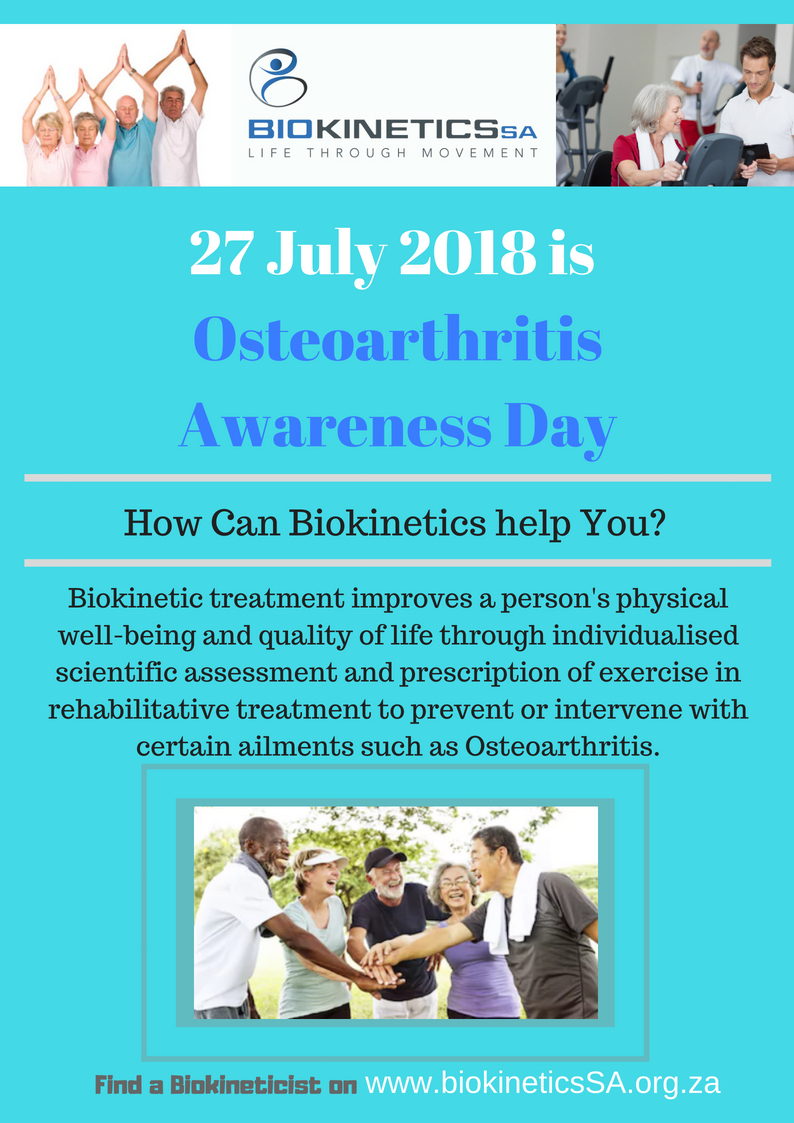
Osteoarthritis and Biokinetics


Two common forms of arthritis exist, namely osteoarthritis and rheumatoid arthritis. Osteoarthritis is a degenerative joint disease in which the cartilage of a specific joint degenerates, resulting in localized pain and inflammation within that joint. The most common joints affected by osteoarthritis are the hands, spine, hips and knees. Rheumatoid arthritis is an inflammatory, multi-joint disease in which numerous joints and organ systems may be affected as a result of an autoimmune response. The most commonly affected joints include the wrists, hands, knees, feet and neck.

When exercising a person with osteoarthritis, one needs to consider the degree of articular cartilage degeneration in the specific joint, the level of pain and discomfort in that joint, the range of motion of the joint, the strength of the surrounding muscles of the affected joint, and finally, whether or not the individual is having a flare up. Osteoarthritis will periodically flare up and then may almost go into remission. During a flare up, pain will be much more severe. Common features associated with exercise include joint pain and stiffness, osteophytes (small bony formations) and cartilage destruction. It is important to strengthen the muscles surrounding the affected joints so that they can support those joints. However, these exercises must be performed carefully, placing minimal stress and impact on those joints. It is also essential to stretch the muscles surrounding the affected joints in order to maintain their range of motion and reduce joint stiffness.

When selecting exercises for individuals with rheumatoid arthritis, you need to know if the individual is having a flare up – increased pain will be the primary symptom. Common features associated with rheumatoid arthritis include morning stiffness that lasts longer than 30 minutes, acute and chronic inflammation, chronic pain and reduced joint integrity. Low-intensity and low-impact exercises, with lots of stretching, are recommended for these individuals. 

For any form of arthritis, it is important that individuals do regular low-impact, aerobic exercise, such as swimming or cycling, and lots of stretching. Any exercises that place heavy stress on the affected joints should be avoided. During flare ups, vigorous exercise must be avoided. Water therapy and water aerobics are highly recommended for individuals who suffer from arthritis.

Arthritis is a common condition, which often leaves people afraid to do any form of physical activity. However, exercise is important in managing the condition and maintaining mobility. So, if you suffer from arthritis, see a biokineticist to have a comprehensive assessment and be given an appropriate exercise programme. This will allow you to function more normally and improve your quality of life.

Thursday, 21 June 2018

Post-Pregnancy Exercise

Having recently had my second baby, I thought I’d remind you of what types of exercise, as well as when one can start exercising following giving birth. Of course, post-pregnancy exercise depends on whether you have had a natural birth or a Caesarean section, and also the level of fitness you managed to maintain during your pregnancy. These are only guidelines – always check with your doctor before starting any exercise programme following giving birth, especially if you had any complications during pregnancy or birth.

Regardless of whether you had a natural birth or a Caesar, the body takes about six weeks to heal from the labour and/or surgery and so one must use this time to rest and recover and focus on your new born baby. Your body has undergone many changes over a period of nine months, so it will take time to get back to what it was before. However, one can start very gentle pelvic floor exercises the day after delivery, and light walking within your pain limits can begin one week later and is good for both your body and mind. Use pain as a guide – if you experience any discomfort, stop whatever you are doing immediately.

About six weeks post-delivery, your body should start to feel a little more normal again. You can increase your pelvic floor exercises and walking as you feel comfortable. Provided your surgical wound has healed without any complications and your doctor gives you the go-ahead, you can start swimming. After 12 weeks, gentle cardio, as well as light resistance exercises can be started, again provided your doctor has cleared you for this. Again, use pain as your guide and stop immediately if you experience any discomfort. Start slowly with whatever it is you are doing and increase gradually within your pain-free limits. Remember: even if you kept fit during pregnancy, your body has undergone a huge amount of trauma, whether it be from labour or surgery or both. If you laboured and still had a Caesar, the trauma to the body is even greater and so you will take a little longer to recover. Always listen to your body!

If you feel like you need some company or a little guidance, consider joining group classes, such as a Pilates class, or consult a biokineticist who will provide you with an appropriate exercise programme.

Exercise is like medicine for your body and mind and will help you to feel like yourself again after a long process of many changes. Embrace your new body and work within its limits. Take your baby for walks with you and enjoy the special time together.

References
The Pregnancy and Baby Book; DK Publishers

Tuesday, 13 February 2018

Pregnancy and Exercise

As I am about to go on maternity leave, I have chosen to remind my readers about the importance of exercise during pregnancy. Please also see the newsflash below.

Although you may feel very tired and uncomfortable during pregnancy, exercise – believe it or not – can help you to feel better, keeping you fit and strong and helping to manage your weight. By exercising during your pregnancy, you will also find it easier to regain your pre-pregnancy physical fitness. There are, however, some important points to be considered to ensure safe exercise for both you and your baby.

If you were participating in a regular exercise programme before falling pregnant, then you can generally continue with a similar programme for the first trimester. If you were not physically active on a regular basis before you became pregnant, then you need to start off very slowly and some guidance may be necessary. Either way, you must check with your doctor before starting an exercise programme, as each person is different and every pregnancy is unique!

During the first trimester, one can generally continue at a similar exercise level to what you were previously doing, although the intensity level may need to drop. Keep your heart rate below 140 beats per minute! Abdominal exercises can be done as usual. Because you will probably feel more tired when you are pregnant, adjust your cardiovascular and weight training to a comfortable level.

During the second trimester, light weight exercises can still be done, although you should avoid lifting weights above your head, as this increases your already elevated blood pressure. Avoid abdominal crunches and exercises performed lying flat on your back. Prolonged time on your back causes your heavier uterus to put pressure on the vena cava, the vein that returns blood from your lower body back to your heart. This interference with blood flow can make you feel dizzy. Cardiovascular exercise should continue, although the intensity must be decreased according to how you feel. Don’t do any running, jogging or other activities that will impact on your joints. Walking, swimming and cycling are best. It is important to always remember to keep your heart rate below 140 beats per minute. Stretching and breathing exercises can also be done. Always remember, depending on how quickly you’ve grown, do what is comfortable for you.

During the third trimester, you will start to feel much more uncomfortable and tired as the baby grows. Do what you can manage comfortably during this final stage. Cardiovascular exercises – walking, cycling, and swimming – can be continued, still keeping the heart rate below 140 beats per minute. Keep exercise sessions to a maximum of 30 minutes, as the increased blood flow associated with exercise can induce contractions if prolonged. Avoid heavy weights and movements that involve changing direction quickly. During pregnancy, your body releases a hormone called relaxin, which causes the ligaments around your pelvic joint to become lax, allowing for more space for the baby to be born. Because all the joints become more lax, the risk of spraining a joint, such as the ankle, increases. Therefore, it is important to wear comfortable shoes at all times and avoid uneven surfaces that could cause falls.

Kegel exercises can be done to strengthen the pelvic floor muscles, which help to minimize bladder leaks, a common problem during and after pregnancy. These exercises are easy to perform and can be done anywhere and anytime.

Lower back pain is a common symptom experienced during pregnancy. Due to the development of your stomach in front, your centre of gravity shifts and it puts a lot of strain on the lower back. If your lower back muscles aren’t strong enough, you will struggle as your baby grows. A Biokineticist can provide appropriate exercises to strengthen these muscles and, therefore, manage this condition.

Tips to remember:
·         Keep your heart rate below 140bpm at all times.
·         If you feel out of breath, slow down.
·         Wear comfortable, loose clothing with proper shoes to support your ankles.
·         Exercise in the morning or evening when it is not too hot.
·         Avoid jerking movements.
·         Avoid lying on your back for too long.
·         Exercises sitting on a big ball are usually very comfortable, but avoid bouncing.
·         Listen to your body – it will tell you if you are doing too much!

Stop exercising if you experience any of the following:
·         Vaginal bleeding
·         Dizziness
·         Faintness
·         Shortness of breath
·         Contractions
·         Nausea
Speak to your doctor before exercising again.

As I have already said, each person is different and every pregnancy is unique, so it is important to consult your doctor before starting any exercise programme! If you are struggling to start or maintain an exercise programme during pregnancy, consult a Biokineticist to assist you with safe and appropriate exercises for you and your baby.

References
http://pregnancy.about.com/od/symptoms/qt/backsleeping.htm

Wednesday, 31 January 2018

Newsflash!!

I would like to welcome Tandy Fourie to my practice.
Tandy is a registered biokineticist and she will be practicing at:
44 First Avenue
Dunvegan, Edenvale
Tel: 011 454 5800

Thursday, 14 December 2017

A Happy, Healthy and Active Festive Season

I would like to thank all my loyal readers for your continued support throughout the year. I hope you have gained some useful insight from the topics covered during the past year.

I wish you a joyous festive season and a prosperous new year. May 2018 be a happy and healthy year for you all.

Remember to keep active during the festive season! Walk, swim, play, laugh and have fun! J

https://c.tadst.com/gfx/750w/christmas.jpg?1

Thursday, 26 October 2017

The Importance of Stretching

We always hear how important it is to stretch, but many of us don’t fully understand why it is so necessary. Here are a few basics on stretching and why it is important.

Stretching is necessary to improve flexibility and reduce the risk of injury. There are various stretching techniques that can be used to improve flexibility, two of which I will discuss here.

The most common stretching technique is static stretching. This is when a muscle is taken to the end of its range (slight discomfort) and held for about 15-30 seconds while the muscle is completely relaxed. Static stretching is most effective post exercise to reduce muscle pain and stiffness.

The second technique is dynamic stretching which involves the individual moving his/her own leg through its full range of motion. As the muscle warms up, the individual will be able to swing the limb further and further through its range, never taking it more than the point of slight discomfort. Dynamic stretching is most commonly used prior to strenuous exercise to increase joint mobility and thus decrease the risk of injury.

Various other techniques exist, including ballistic stretching, proprioceptive neuromuscular facilitation (PNF) and active-isolated stretching; however, these techniques are more complicated and usually require the assistance of a therapist, such as a biokineticist or physiotherapist.

Stretching should be done pre and post exercise, as part of a warm up and cool down. Stretching before exercise assists in reducing the risk of injury, while stretching after exercise helps maintain increased flexibility of muscles and helps to reduce muscular pain and stiffness following exercise. Remember: never stretch a cold muscle; rather do a gentle warm up such as a walk or light jog and then stretch before starting any strenuous exercise.

When stretching, one should feel slight discomfort, not pain. Overstretching a muscle beyond its limits can cause damage to the tissue. The range of movement at a joint, or this point of slight discomfort, will increase as flexibility improves with regular stretching. Every person and every joint is unique and flexibility will vary depending on the joint, activity levels and types of activities performed on a regular basis, so only stretch as far as YOU can.

Stretching provides a great form of relaxation and stress relief as well. People of all ages and activity levels need to stretch to reduce the risk of injury, maintain joint mobility and keep the body moving with ease and minimal pain. 

Friday, 25 August 2017

Addressing Multiple Injuries

Because biokinetics involves looking at the entire body and the way in which it moves, biokineticists are able to assess and rehabilitate more than one injury at a time. Often two injuries may even be linked and it is then useful to rehabilitate them together anyway. This is one of the main differences between biokinetics and physiotherapy, a common question among the general public.

Physiotherapists treat symptoms, providing immediate relief by use of massage, heat, cold and various other techniques. Biokineticists look at the entire body to establish what is causing the problem in the first place, such as imbalances in muscle strength and flexibility. Appropriate exercises are then prescribed to try and correct these imbalances so that hopefully the injury does not keep recurring. It is, therefore, a slower process and changes are often only noticed after six weeks of regular rehabilitative exercise. However, it is hopefully a long-term solution.

It is for this reason that biokineticists can rehabilitate multiple injuries at the same time and, often, it is easier to do so. For example, one may have tendinitis in the ankle and also complain of knee pain in the opposite leg. There is a very good chance that the knee pain is as a result of overcompensation for the pain in the opposite ankle. Or, one might experience pain in the knee of the same leg as the ankle, again due to compensation. If there is a sore or weak point somewhere in the body, chances are very good that somewhere else, something will be compensating for that weakness, which may lead to further pain or injury.

This is also why it is so important to complete a rehabilitation programme. Until the injury is completely rehabilitated, meaning there is no longer an imbalance in muscle strength or flexibility, the injury may recur or other problems may arise due to compensation.


So, biokinetics may be a long process, but if you follow the programme you are given properly and to the end, it can be very successful and you may be tackling two birds with one stone. The knowledge you will gain regarding body awareness and technique will also stand you in good stead for the future in terms of your physical functioning.

Friday, 30 June 2017

Autism and Exercise

Autism is a developmental condition that is normally diagnosed in childhood and is present throughout a person’s life. It affects one’s social skills, as people with this condition struggle to communicate normally and social interaction is generally a problem. These individuals like to stick to a specific routine and don’t cope well when this routine is disrupted. Due to the psychological nature of the condition, those with autism may experience low self-esteem, leading to poor posture and low muscle tone. They may also be overweight due to physical inactivity.

Exercise cannot change the actual condition; however, it is an important tool in managing the symptoms associated with autism. An individual who participates in a regular exercise regimen will reap all the benefits associated with any regular exercise routine, including improved cardiovascular fitness, increased muscle strength and endurance, as well as enhanced ability to perform daily activities.

More specific to those with autism are the psychological benefits. Exercise stimulates the release of endorphins, or happy hormones, which improve mood and mental wellbeing. Specific exercises to improve posture should also be included in the exercise programme. By performing new exercises, individuals are given a sense of achievement, leading to enhanced self-esteem. Exercising in an appropriate social environment can contribute to improved social interaction.

There are some factors that need to be considered by the exercise specialist when working with a person with autism. These individuals may come across as lacking in intellectual capacity because their social cues are not the same as people without autism; however, they are in fact very intelligent individuals and should be treated as such. Like all people, they will have good and bad days; however, these mood changes are often amplified as they are unable to ‘hide their feelings’ and so we must be sensitive to this. The environment should have minimal distractions and be a safe and positive space. The most important thing is that these individuals enjoy their exercise sessions so that they are a rewarding and positive experience. It is the role of the biokineticist or exercise specialist to encourage and promote this positive, healthy and active lifestyle.

References

Thursday, 6 April 2017

Chronic Obstructive Pulmonary Disease

Chronic Obstructive Pulmonary Disease (COPD) is a complex breathing condition affecting not only the ventilatory system, but also the respiratory, cardiovascular and muscular systems. Ventilatory problems include increased resistance of the airways, increased effort to breath, weakness and fatigue of the ventilatory muscles, inefficient breathing and later, failure to breathe. Respiratory problems refer to the impaired exchange of gases (oxygen and carbon dioxide) at a cellular level in the lungs. Cardiovascular complications include reduced cardiovascular fitness due to decreased physical activity, and inadequate cardiac function with increased demand. Muscular problems include deconditioning as a result of reduced physical activity.

People with COPD also often suffer with psychological complications such as depression, as they are unable to perform normal daily activities, and anxiety linked to their symptoms, the most common of which is breathlessness.

As exercise increases breathing rate and cardiac output, people with COPD will most likely experience difficulty with exercise and thus often do not participate in any regular physical activity. It is important, however, that individuals with this condition do participate in regular exercise in order to improve cardiovascular fitness, muscle strength and endurance, balance, flexibility, and body composition leading to enhanced self image. Exercise also helps to desensitize one’s response to breathlessness, assisting in the management of symptoms and thus reducing anxiety. Breathing also becomes more efficient and effective with appropriate exercise.

It is important to consider the effects of certain medications on exercise capacity, as these individuals are often on various medications to manage their condition. Exercise programming will thus need to be individualised and must be adjusted each day, depending on how the individual is feeling. Some individuals may need to monitor their oxyhaemoglobin saturation levels, especially in the early days of starting an exercise programme. It is important to always listen to one’s symptoms and adjust the exercise intensity accordingly, and allow lots of rest intervals.

The main goal is to keep one engaged in an ongoing regular exercise regimen. It must therefore be manageable from a physical capacity perspective, and enjoyable to ensure that it is continued. Then, not only will one reap the disease-related benefits, but also the many other benefits of participating in a regular exercise regimen.

References
ACSM’s Exercise Management for Person’s with Chronic Diseases and Disabilities

Thursday, 9 February 2017

What can a Biokineticist do for you?

Biokinetics is the use of exercise and movement as a form of rehabilitation or therapy. A biokineticist, therefore, uses exercise and movement to enhance the wellness and functionality of an individual’s physical state to improve the individual’s quality of life.

There are three main areas in which biokinetics is involved, namely orthopaedic rehabilitation, chronic disease management and general wellness.

Orthopaedic rehabilitation: generally, if a person suffers an injury or has surgery (ligament reconstruction, joint replacement, spinal fusion, etc.), s/he should see a biokineticist, after physiotherapy, to strengthen the affected muscles, so that the person can return to their daily activities or sporting activities with reduced risk of recurrence. Often, biokinetics is also recommended prior to surgery (prehab), to strengthen appropriate muscles to support the affected area, thus speeding up the post-surgery rehabilitation.

Chronic disease management: exercise is used as a form of medicine to assist in the management of numerous chronic diseases, such as diabetes, multiple sclerosis, heart disease, arthritis and many more. Certain conditions respond to certain types of exercise, so the biokineticist will provide appropriate exercises for the specific condition.

General wellness: biokineticists will assess and then provide exercise programmes to improve an individual’s general health status, by assisting with weight management, general fitness and muscle strengthening.

So, if you require assistance with any of the following, contact a biokineticist:
·         Sports injury rehabilitation
·         Post-operative rehabilitation
·         Orthopaedic rehabilitation
·         Chronic disease management
·         Posture and gait correction
·         Diabetes and exercise education
·         Pre-and post-natal exercise
·         Other physical conditions

Tuesday, 13 December 2016

Keeping Active this Holiday Season

As we approach the holiday season, we must not let ourselves lose all the physical fitness we have worked so hard to improve throughout the year. Having said that, it is important to take a break from the everyday routine that we find ourselves in, so that we are motivated to start afresh in the new year. So, here are some suggestions on how you and your family can keep active during the holiday season.

If you are staying home this season, try to do different physical activities, such as walks in the park with your family or friends, going to the zoo, going ice skating, playing with your children in the garden, and swimming. Go to the gym and attend different classes that you normally aren’t able to get to.

If you are going on holiday, walk on the beach, swim, play with the kids, walk instead of taking the car/bus whenever possible, and take the stairs instead of the lift. Choose 3 simple exercises that you can do each morning to start your day.

Remember: you feel better when you keep active! Exercise also helps you relax. So, look for ways to stay active this holiday, rather than loafing around. Do enjoyable and different activities with your families. Most importantly, relax and have fun!


Merry Christmas and best wishes for a happy and healthy 2017!!!

https://encrypted-tbn2.gstatic.com/images?q=tbn:ANd9GcSjOIrUhJR9EVlmqrUX9UfYXETIq65I4fKnIfdUFB4JoMP1trtCZQ

Friday, 4 November 2016

Newsflash!!
Please note that Nicole Lay Biokineticist is now practising at:
44 First Avenue, Dunvegan, Edenvale

Tel: 011 454 5800

Calf Strain

Calf strains commonly occur at the medial head of the gastrocnemius muscle and are often seen in tennis players over the age of 40. This strain is caused by the forced upward motion of the toes whilst the knee is straight or by the forced extension of the knee while the toes are pointing upwards. A calf strain can also occur when there is muscular fatigue and cramping.

Signs and symptoms
As the strain happens, an individual will feel a tear in the calf muscle, together with pain, swelling, stiffness and reduced function. Later, the lower leg, ankle and foot will become discoloured due to internal bleeding.

Management
Initial treatment includes rest, ice, compression and elevation. In cases of severe muscle strains, one may need crutches to allow the muscle time to heal. Gentle stretching of the calf muscle should be done on a regular basis. Once sufficient healing has occurred, appropriate and progressive strengthening exercises should be prescribed by a biokineticist, so that re-injury does not occur when one returns to daily activities or sport. If dehydration was causing muscle cramp, leading to the strain, then the dehydration must be treated with sufficient fluid intake. Stretching and strengthening of the calf must also be done to reduce muscle cramping.

References
Foundations of Athletic Training: Prevention, Assessment and Management

Friday, 12 August 2016

Snapping Hip Syndrome

In my previous blog, I wrote about bursitis at the hip. Snapping hip syndrome can occur as a result of chronic bursitis at the hip. This condition is commonly found in dancers, runners and cheerleaders. The cause of this condition can either be from within the joint itself, or from structures just outside of the joint capsule.

I will not go into anatomical details here, but basically, various ligaments and muscles can be affected, resulting in three different types of snapping hip syndrome that may occur. A ligament or muscle snaps over a bony structure, thus the name ‘snapping hip syndrome’. The muscle or ligament involved will determine the type of snapping hip syndrome present. Iliotibial band friction syndrome, which I have written about previously, can also cause snapping hip syndrome.

Signs and Symptoms
A snapping sensation is heard or felt when performing certain movements of the hip. The most common movement is bending the hip and turning the leg outwards while standing on one leg. Snapping may also be experienced in the inner groin. Pain is not usually associated with this condition.

Management
Non-streroidal anti-inflammatory medications may be used to treat the initial inflammation caused by the bursitis. Thereafter, an appropriate exercise rehabilitation programme should be prescribed by a biokineticist to correct muscle tightness and weakness surrounding the joint. Poor training techniques and biomechanics will also be assessed by the biokineticist and corrected.

References
Foundations of Athletic Training: Prevention, Assessment and Management

Friday, 24 June 2016

Bursitis at the Hip

Hip bursitis is an inflammatory condition, whereby a bursa of the hip becomes  inflamed, either due to chronic rubbing, causing friction and therefore inflammation; or inflammation as a result of a traumatic injury to the area. There are three bursae of the hip that can be affected, namely the greater trochanteric bursa, the iliopsoas bursa and the ischial bursa. Hip bursitis is a common running injury.

Greater trochanteric bursitis
This bursitis is commonly seen in female runners (because females have anatomically wider hips), road runners (the camber of the road affects running angles), cross-country skiers and ballet dancers. A burning or aching sensation is experienced deep in the hip joint and is exacerbated by walking and exercise. Pain may also refer down the outside of the thigh.

Iliopsoas bursitis
Repeated compression of the iliopsoas bursa causes this type of bursitis. It can also occur when there is osteoarthritis present at the hip. Pain is also experienced deep in the hip joint, slightly inside and to the front of the joint itself.

Ischial bursitis
This less common type of bursitis is caused either by a direct blow to the hip, such as a fall, or from prolonged sitting on hard surfaces. Pain is felt at the back of the hip and is exacerbated by prolonged sitting, uphill running, and any pressure applied to the back of the hip joint.

Management of hip bursitis
Initial treatment includes rest, ice, deep massage and anti-inflammatory drugs. Stretching exercises are given for the involved muscles. In more severe cases, a cortisone injection into the site may be necessary. Once the initial pain has been treated, running technique, posture and walking pattern should be assessed by a biokineticist to assess whether there are biomechanical factors contributing to the condition. From this assessment, appropriate exercises are then prescribed by the biokineticist to stretch and/or strengthen the involved muscles and improve running or walking abnormalities to prevent the condition from recurring.

References
Foundations of Athletic Training: Prevention, Assessment and Management

Thursday, 17 March 2016

Post-Pregnancy Exercise

Having recently had a baby myself, I thought I would give some insight into what types of exercise, as well as when one can start exercising following giving birth. Of course, post-pregnancy exercise depends on whether you have had a natural birth or a Caesarean section, and also the level of fitness you managed to maintain during your pregnancy. These are only guidelines – always check with your doctor before starting any exercise programme following giving birth, especially if you had any complications during pregnancy or birth.

Regardless of whether you had a natural birth or a Caesar, the body takes about six weeks to heal from the labour and/or surgery and so one must use this time to rest and recover and focus on your new born baby. Your body has undergone many changes over a period of nine months, so it will take time to get back to what it was before. However, one can start very gentle pelvic floor exercises the day after delivery, and light walking within your pain limits can begin one week later and is good for both your body and mind. Use pain as a guide – if you experience any discomfort, stop whatever you are doing immediately.

About six weeks post-delivery, your body should start to feel a little more normal again. You can increase your pelvic floor exercises and walking as you feel comfortable. Provided your surgical wound has healed without any complications and your doctor gives you the go-ahead, you can start swimming. After 12 weeks, gentle cardio, as well as light resistance exercises can be started, again provided your doctor has cleared you for this. Again, use pain as your guide and stop immediately if you experience any discomfort. Start slowly with whatever it is you are doing and increase gradually within your pain-free limits. Remember: even if you kept fit during pregnancy, your body has undergone a huge amount of trauma, whether it be from labour or surgery or both. If you laboured and still had a Caesar, the trauma to the body is even greater and so you will take a little longer to recover. Always listen to your body!

If you feel like you need some company or a little guidance, consider joining group classes, such as a Pilates class, or consult a biokineticist who will provide you with an appropriate exercise programme.

Exercise is like medicine for your body and mind and will help you to feel like yourself again after a long process of many changes. Embrace your new body and work within its limits. Take your baby for walks with you and enjoy the special time together.

References
The Pregnancy and Baby Book; DK Publishers

Tuesday, 15 December 2015

A Joyous, Healthy and Active Festive Season

Once again I would like to thank all my loyal readers for your continued support throughout the year. I hope you have gained some useful insight from the topics covered during the past year.

I wish you a joyous festive season and a prosperous new year. May 2016 be a happy and healthy year for you all.

Remember to keep active during the festive season! Play and laughter can be the best exercise! J

Monday, 2 November 2015

Plantar Fasciitis

Plantar fasciitis is one of the most common foot injuries, affecting approximately 10% of runners. It is an inflammatory condition, in which the connective tissue on the underside of the foot becomes inflamed. Intrinsic factors contributing to this condition include biomechanical factors related to the foot and ankles, as well as muscle imbalances in strength and flexibility of the lower leg and foot muscles. Extrinsic factors include incorrect footwear, poor training and excessive running on hard or uneven surfaces.

Signs and Symptoms
Pain is experienced on the underside of the foot, near the heel, and is usually worse after rest and will be particularly severe first thing in the morning when weight is placed on the foot. This pain tends to improve within a few minutes of walking. In more severe cases, where there is neural involvement as well, pain is more severe and widespread. Pain often improves with activity, but will recur after rest.

Management
Ice and non-steroidal anti-inflammatory drugs are used to manage the acute pain and inflammation. Massage is used to reduce inflammation in the fascia. Strapping and heel lifts may be used to take the pressure off the arch of the foot. Achilles tendon stretches should be performed, as well as various other exercises to improve range of motion in the ankle and foot, within pain-free ranges. Gentle strengthening exercises can be done to improve muscle strength around the foot and ankle, again within pain-free ranges. A biokineticist can then assess factors contributing to the condition and provide appropriate stretching and strengthening exercises to improve muscle imbalances, thereby preventing the condition form recurring.

References
Foundations of Athletic Training: Prevention, Assessment and Management

Tuesday, 13 October 2015

Newsflash!!

I would like to welcome Monique Turner to my practice.
Monique is a registered biokineticist and she will be practicing at:
95 Boeing Road East
Bedfordview
(entrance on Marais Street)
Tel: 011 454 0232